
For the past five years, tech giants have spent tens of billions of dollars trying to build the "Metaverse." They gave us floating torsos in sterile digital conference rooms and ghost towns masquerading as futuristic cities. They got it entirely backward. The metaverse doesn't start with a boardroom; it starts with a campfire in Elwynn Forest.
World of Warcraft already possesses everything modern VR platforms are begging for: twenty years of rich lore, established social structures, intricate player economies, visual status symbols, and millions of active users who have spent thousands of hours hanging out in its world. Azeroth doesn't need to be rebuilt from scratch for virtual reality. Blizzard just needs to open the window.
The Art Style Advantage: Immune to the Uncanny Valley
Photorealism is the enemy of comfortable VR. Pushing hyper-realistic skin textures, dynamic lighting, and complex geometry at dual-4K resolutions demands extreme GPU horsepower, and the results often plunge straight into the uncanny valley. WoW's hand-painted, stylized low-poly aesthetic sidesteps all of it. The stylized proportions of Orcs, Elves, and Tauren read as heroic and intentional in 3D space rather than creepy, and the lighter geometry makes it dramatically easier to hold the 90–120 Hz refresh rates VR needs to avoid motion sickness without demanding bleeding-edge hardware. Standing at the gates of Orgrimmar or looking up at the World Tree in VR would deliver an authentic sense of scale that no monitor can match.
Pacing, Travel Time, and Digital Presence
Modern games rush players from waypoint to waypoint, but WoW was originally designed around spatial awareness, environmental travel, and physical pacing. The idle moments—riding a zeppelin from Orgrimmar to Undercity, waiting on the docks in Booty Bay, gathering outside a raid entrance—are exactly the kind of natural social spaces where VR presence thrives. A gryphon flight across the Eastern Kingdoms stops being wasted travel time and becomes a breathtaking sightseeing trip, and spatial audio turns Stormwind's cathedral square or the quiet hum of Moonglade into a physical place rather than a backdrop.
Someone Already Built It
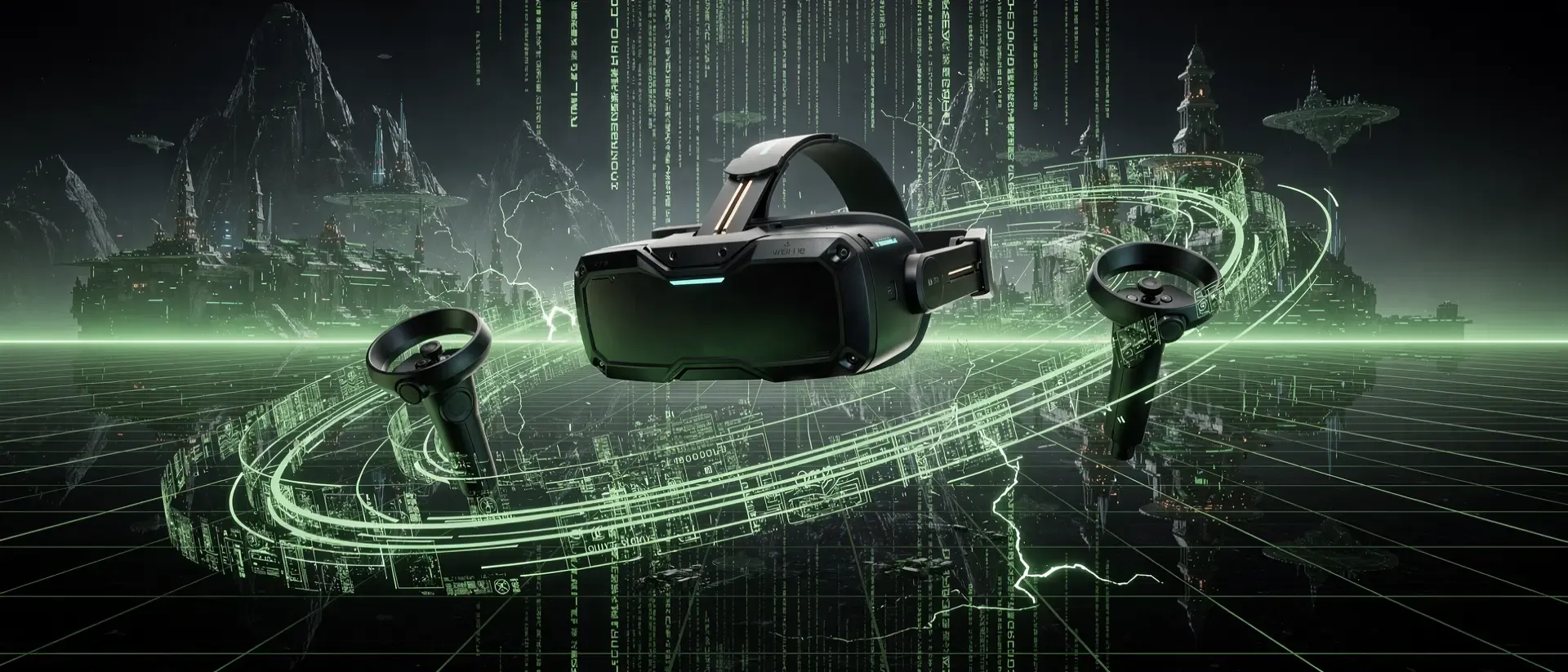
Here's the part most people don't know: VR World of Warcraft has already been built. A modding collective called Flat2VR spent roughly a decade on WoVR, a fan mod released in 2024 that adds real six-degrees-of-freedom VR with motion controllers to WoW—directional audio, a floating UI, first- and third-person switching, and compatibility with existing addons. The catch tells you exactly what's still missing: it only runs on patch 3.3.5a, the final Wrath of the Lich King client from 2010, and it's an experimental, unsupported release with no active development. Two people proved this is technically possible on fifteen-year-old client code, in their spare time, without engine access. A studio with the actual engine source and official controller support wouldn't be starting from zero—they'd be finishing a job that's already 90% proven.
The Timing Might Genuinely Be Perfect
Blizzard's newest expansion, Midnight, just shipped the one thing WoW has never had in twenty years: player housing and neighborhoods. A personal 3D space you decorate, furnish, and invite friends into is exactly the core loop every metaverse product has bet on and mostly failed to make people care about. Walking through your own house, waving a guildmate in, showing off a hard-earned trophy on the mantle—in VR, that isn't a tech demo. It's the entire pitch of "the metaverse," except it's shipping to a playerbase that already logs in daily, with twenty years of lore behind it.

How to Fit 50 Spells on a VR Controller
The immediate counterargument to "VR WoW" is keybindings. How do you translate a game requiring thirty to fifty active abilities onto a pair of VR controllers? You don't map every key to a physical button; you combine physical inputs with spatial UI design. It's worth being precise about the hardware, because the honest gap is bigger than it first looks. A modern Meta Quest Touch controller gives you, per hand, one trigger, one grip, one thumbstick with click, and two face buttons—roughly ten distinct physical inputs across both hands before you touch a system button. Using grip as a modifier can stretch that further, but grip is also the "grab" gesture in most VR interaction models, so stacking a rotation modifier onto it risks fighting normal VR grabbing conventions. That's a real design tension, not a free win.
Three approaches, in increasing order of how much they lean on spatial UI rather than physical buttons, solve the problem. You bind the six to eight highest-priority abilities directly to physical inputs—the same ones a WeakAuras or rotation addon would already surface as top priority—and move everything else off the sticks. Then a context-aware wrist menu, like the Half-Life: Alyx radial, appears on a raise-controller gesture and filters itself by stance, so interrupts and dispels show while healing and cooldowns show while DPS-ing. Finally, you go diegetic: cooldowns become glowing runes on the character's own weapon, buffs become a visible aura around the character, and enemy cast bars become a literal light building over their head. Pulling UI out of menu space and into world space isn't just thematically fitting—it's standard VR comfort practice, since floating 2D menus are among the more common sources of VR discomfort. None of this is unsolved territory. Full VR flight-sim cockpits, battle-royale loadouts, and spell-casting systems in games like Blade & Sorcery all prove deep ability rosters work in VR. WoW wouldn't be inventing ability-wheel design from scratch; it would be adapting patterns that already work to a game that already has the players.
Addons Don't Have to Die
The harder objection from the r/wow crowd is addons. High-end players live or die by WeakAuras, Damage Meters, and DBM, and if a VR client simply couldn't run them, the entire competitive community would write it off as unplayable. But the answer isn't to throw addons away—it's to let them render in 3D. Blizzard's UI API could allow addons to draw onto diegetic wrist-mounted HUDs, or pin panels directly into the environment, so your boss cooldown tracker floats as a subtle readout on your forearm and your threat meter sits anchored in your peripheral vision exactly where it already lives on a monitor. The information stays; only the surface changes from a flat 2D rectangle to something that belongs in the world.
Targeting: Eye-Tracking Fixes Tab-Targeting
WoW is a tab-target game, and tab-targeting feels terrible with motion controllers—nobody wants to wave a laser pointer at a moving raid boss for four hours. Modern headsets quietly solve this. Eye-tracking is now standard on devices like the Quest Pro and PSVR2, and it turns targeting into something close to magic: you look at the monster or ally you want, squeeze the trigger, and the game selects exactly what your eyes are already focused on. Looking and clicking is the most natural targeting scheme VR has ever had, and it maps onto WoW's tab-target logic almost one-to-one.
Locomotion and the "Gorilla Arm" Problem
Then there's the physical reality of a four-hour raid night. WoW demands constant movement, violent boss knockbacks, and marathon play sessions, and first-person VR is a guaranteed recipe for motion sickness and arm fatigue. The fix is to stop pretending VR WoW has to be first-person all the time. A hybrid camera solves it: you explore your Midnight player house, stroll through Dalaran, and soak in the world in immersive first-person, then pull the camera out into a third-person "tabletop god view"—the style games like Demeo already use—for Mythic+ and raids. Looking down over your character from a tactical overhead perspective keeps spatial awareness intact, removes the motion-sickness trigger from boss knockbacks entirely, and prevents the arm fatigue everyone who's ever played a long VR session knows too well. First-person for presence, third-person for progression.
The Low-Risk Pitch: A VR Client Layer, Not WoW 2
Developing a standalone VR MMORPG from scratch carries enormous financial risk. Modifying the existing client to support a native VR display and control layer minimizes development cost while opening a massive new market. VR players would log into the exact same servers, guilds, and raids alongside desktop players, with optional camera modes toggling between first-person immersion for questing and exploring and the third-person god view for content where split-second precision matters more than presence. Blizzard wouldn't be building a second game; they'd be adding a window.
The Business Case Already Exists
This part is easy to miss. Microsoft, WoW's parent company since the Activision Blizzard acquisition, deepened its partnership with Meta in July 2026—Xbox Game Pass is now bundled directly into Meta's Horizon+ subscription on Quest headsets, and Meta is rolling out Quest-controller-to-Xbox-controller emulation. The corporate relationship needed to make a Quest-native WoW experience low-friction to ship already exists today. This isn't a "who would even partner on this" problem. The partnership is already signed.
Conclusion
Meta spent billions trying to build a crowded 3D social world from nothing and got Horizon Worlds. Blizzard already has the crowded 3D social world—twenty years of it, complete with guilds, housing, cosmetic status, and millions of people who show up every single day. It just isn't in VR yet. Somebody already proved the tech works, on a decade-old client, in their spare time. The distribution deal with the biggest headset maker on the planet already exists. The hardest remaining problem is an action bar—and the answer involves eye-tracking, wrist-mounted addons, and a camera you can pull back when the raid gets messy. That seems like a solvable problem.